
An armchair has a tougher job than it looks. It might be your spot for a cuppa and the morning news, the chair a grandparent always heads for, the corner where you read, or the place you put your feet up after a long shift. Each of those needs a slightly different chair, and the names (wingback, tub, club, snuggler) don't always make it obvious which is which.
In this guide we'll explain the main types of armchair in plain English, what each one is good at, and how to check the fit before you buy, from seat height to how much room a recliner needs. You can browse everything as you read in our armchairs collection.
First, what's the chair for?
Before you think about style, think about the moment you'll use it most. It narrows things down quickly.
| If you want a chair for… | Look at |
|---|---|
| Reading or a nap with head support | Wingback or high-back chairs |
| A small room or a bedroom corner | Tub chairs and slim accent chairs |
| Adding colour or a talking point | Accent chairs |
| Turning between the TV and the room | Swivel chairs |
| Stretching right out | Recliners, or a chair with a footstool |
| Help getting up and down | Riser recliners (lift and tilt) |
| Curling up, or sharing with a child or pet | Loveseats and snugglers |
Wingback and high-back chairs
A wingback has a tall back with "wings" at the sides, around head height. They were originally designed to keep draughts off your face by the fire, and they still give lovely support for your head and shoulders if you like to doze off in your chair.
Modern versions are often softer and more rounded than the traditional buttoned style. The Tabby lounge chair, for example, has a high back with gently curved wings on slim tapered legs, so it gives the support without feeling heavy.
Great for: reading, napping, anyone who likes to rest their head.
Think about: the tall back is more noticeable in a room, so they suit corners and the sides of a fireplace better than the middle of a space.
Club and tub chairs
These two get mixed up a lot. Both are lower and more enclosed than a wingback, with arms that are at, or close to, the same height as the back.
Club chairs
A club chair is deep, low and generously padded, the sort of chair you sink into. Leather and leather-effect versions are the classic look. The Club leather-effect armchair pairs a cushioned, stitched seat and back with wooden arms for a vintage feel that works in a study as well as a lounge.
Tub chairs
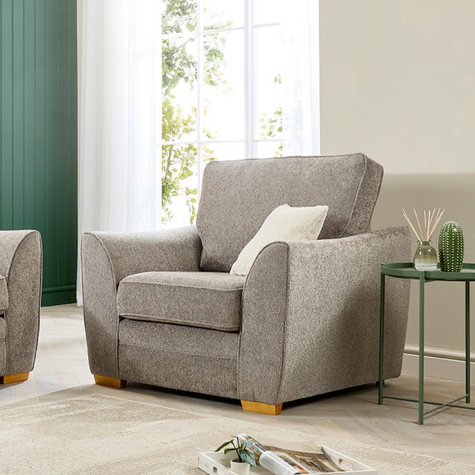
A tub chair has a curved back that flows round into the arms, like a barrel cut in half. They're usually compact, which makes them brilliant for bedrooms, bay windows and smaller living rooms.

The Maren armchair's curved, wrap-around arms give it a cosy tub-style shape without taking up much floor.
Accent chairs
"Accent chair" is less about shape and more about the role a chair plays. It's the piece that doesn't match the sofa on purpose: a bold colour, a boucle texture, a pattern or an unusual frame. Accent chairs are usually lighter and more upright than a big recliner, so they're easy to move around when guests come.
They're a great way to change the feel of a room without replacing the sofa. Have a look at our accent chairs, and for more on mixing colours and styles, read our guide to accent chairs.
Swivel and lounge chairs
A swivel chair sits on a turning base, so you can face the TV one minute and the conversation the next. They're especially handy in open-plan rooms, or where a chair sits between two zones.

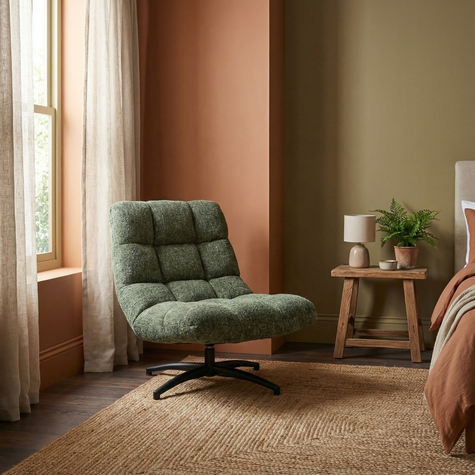
The Chilham swivel chair has a deep, waffle-padded seat and a full-turning metal base.
"Lounge chair" usually means a lower, more laid-back chair with a reclined back angle, built for relaxing rather than sitting up straight. Some, like the Chilham, swivel and tilt back too. They feel great, but the low seat can be harder to get out of, so try one if anyone in the house has stiff knees.
Recliners: manual, power or riser
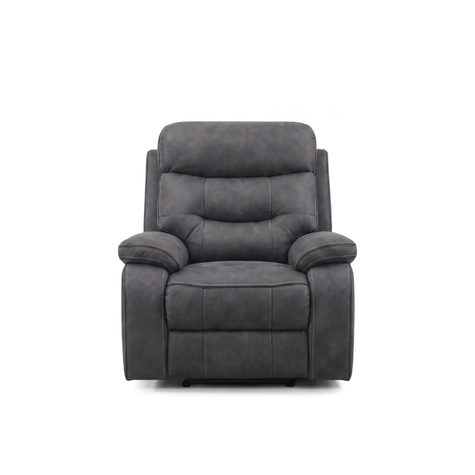
If you want to put your feet up properly, a recliner is the obvious choice. The back tips back and a footrest rises, so you can lie almost flat. There are three main types, all in our recliner chairs range.
Manual recliners
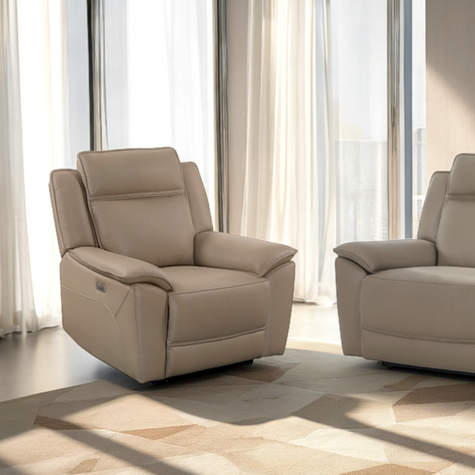
You recline with a side lever or by pushing back in the seat. There's no plug to worry about, so you can put the chair anywhere. The Isobelle recliner works this way, with a high back and a pocket-sprung seat. Browse more manual recliners.

The Isobelle recliner with its footrest up: a high, padded back and a seat built for stretching out.
Power recliners
A button does the work, and you can stop at any angle you like. Many have extras such as power headrests or USB charging. They need to be near a socket, so plan where the lead will run. See our power recliner chairs.
Riser recliners
Also called lift and tilt chairs. As well as reclining, the whole chair rises and tips gently forward to help you stand up and sit down. The Verona lift and tilt chair has two motors, one for the recline and one for the lift, so they work independently.
Our tip: measure for a recliner when it's fully open, not just when it's closed. Allow space behind for the back to tip and in front for the footrest, and check you can still walk past.
Chairs with a footstool
Not everyone wants a mechanism. An armchair with a matching footstool gives you the feet-up comfort of a recliner with a simpler, more stylish look, and the footstool doubles as extra seating or a spot for a tray.

The Pascal armchair comes with a matching footstool, and its high winged back gives good head support too.
Already have a chair you love? A separate footstool can do the same job. Look for one roughly level with the chair seat, or slightly lower, so your legs rest comfortably.
Loveseats and snugglers
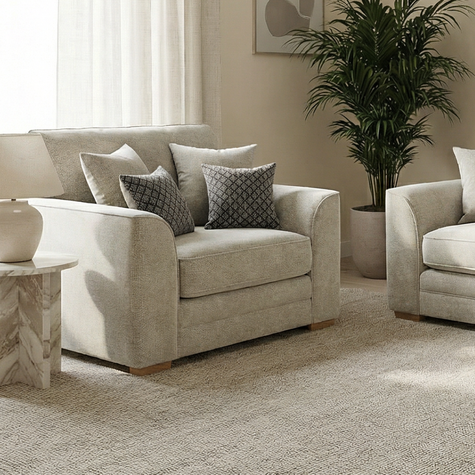
A loveseat (sometimes called a snuggler, cuddle chair or 1.5 seater) sits between an armchair and a 2-seater sofa. It's roomy enough to curl up with your legs tucked under you, share with a little one, or make room for the dog.
They're a clever choice where a full sofa won't fit, such as a bedroom, a conservatory or the end of a kitchen-diner. The Rosie loveseat is a good example: a wider version of the Rosie armchair that works as one generous seat or a cosy spot for two. Browse all our loveseats.
Measure for comfort and space
Two chairs can look identical in photos and feel completely different. These are the measurements worth checking on the product page:
Seat height: most armchairs sit somewhere around 43–50cm from the floor. Your feet should rest flat with your knees roughly level with your hips. Higher seats are easier to get out of.
Seat depth: if you're shorter, a shallower seat stops your legs dangling. Taller people usually prefer a deeper seat that supports the thighs.
Back height: want to rest your head? Look for a high back or a wingback.
Arms: wide, padded arms are comfy for leaning on. Slim or open arms save width in a small room.
Overall width: armchairs often range from about 70cm for a slim accent chair to around 100cm for a big recliner or loveseat.
In a smaller room, chairs on legs that show some floor underneath feel lighter than chunky chairs that sit right down on the carpet. Leave enough space around the chair for a side table and a walkway.
Fabric or leather?
Fabric gives you the widest choice of colours and textures, from soft chenille to boucle, and feels warm to sit on straight away. Leather and leather-effect chairs wipe clean easily and often age with character, which is why they're popular in studies and busy family rooms. Compare our fabric chairs and leather chairs side by side.
Quick armchair checklist
Decided what the chair is mainly for (reading, TV, napping, guests)
Chosen a type: wingback, club, tub, accent, swivel, recliner, chair and footstool or loveseat
Seat height suits whoever will use it most
Seat depth works for your leg length
Enough room for a recliner when fully open
A socket nearby for a power or riser recliner
Width checked against the space, plus room for a side table
Fabric or leather chosen to suit kids, pets and how you live
Common questions
What's the difference between a tub chair and a club chair?
A tub chair has a curved back that wraps round into the arms and is usually compact. A club chair is deeper, lower and more heavily padded, with a squarer shape. Both are lower and more enclosed than a wingback.
What's the most comfortable type of armchair?
It depends how you like to sit. For lying back, a recliner or a chair with a footstool is hard to beat. For reading with your head supported, try a wingback. For curling up, a loveseat gives you the most room.
What armchair is best for an elderly relative?
Look for a firm, higher seat, supportive arms to push up from and a high back. If getting up is difficult, a riser recliner that lifts and tilts forward can make a real difference. Low, deep lounge chairs are best avoided.
Can I put an armchair in a small room?
Yes. Tub chairs, slim accent chairs and chairs on visible legs all work well. Measure the space, and remember to allow room to walk around the chair, not just for the chair itself.
Still weighing up wingback against tub, or manual against power? We're always happy to help. Get in touch with your room size and how you'd like to use the chair, and we'll suggest a few that fit.