


The most common rug mistake we see is simple: the rug is too small. One that looks generous in the shop ends up as a little island in the middle of the floor, with the sofa stranded away from it, and the room never quite feels finished.
Getting the size right is mostly about measuring your seating, not your room. In this guide we'll go through the standard UK rug sizes, three easy ways to lay a rug with your sofa, what to do with corner sofas and awkward rooms, and where a runner fits in. If you're still deciding between a plain rug and something more luxurious, our guide to choosing the right rug for your living room covers style and texture.
The short answer
If you only remember one thing, make it this: a living room rug should connect your seating, not sit apart from it. In practice that means:
The rug is at least as wide as your sofa, and ideally a little wider, roughly 15–20cm past each end.
At least the front legs of the sofa and any chairs touch the rug.
There's still a strip of bare floor showing between the rug and the walls.
Stuck between two sizes? The bigger one is nearly always the better buy.
Common UK rug sizes
Rugs in the UK tend to come in a handful of standard sizes. These are the ones you'll find across our rug collection, and what each one usually suits in a living room.
| Rug size | Works well for |
|---|---|
| 60 x 230cm (runner) | Hallways leading into the lounge, behind a sofa in an open-plan room, along a kitchen run |
| 80 x 150cm | In front of a single armchair, a reading corner or beside a bed |
| 120 x 170cm | Small living rooms, a 2-seater sofa, or under a coffee table as a "floating" rug |
| 160 x 230cm | Most UK living rooms: a 3-seater with front legs on, or a 2-seater and a chair |
| 200 x 290cm | Larger rooms, corner sofas, a sofa plus two chairs, or all legs on the rug |
Not every rug comes in every size, so check the options on the product page. Our Esme wool rug, for example, comes in four sizes from 80 x 150cm up to 200 x 290cm, while some flatweave and hand-braided styles only come in one.
Measure your seating first
Before you fall for a colour or pattern, grab a tape measure. You need three numbers:
Sofa width, arm to arm. Your rug should be close to this or wider.
The seating area, from the front of the sofa to the front of the chair or TV unit opposite. This tells you how deep the rug can be.
Walkways, the routes people use through the room. Ideally a walkway either crosses the whole rug or misses it completely, so nobody's tripping over an edge halfway across.
Our tip: mark the rug's outline on the floor with masking tape (or lay out some old newspapers) and leave it for a day or two. You'll know straight away whether 160 x 230cm feels right or whether you need to go up a size.
Three ways to lay a rug
There's no single right answer; it depends on your room, your furniture and your budget. These are the three layouts we suggest most often.
Everything on the rug
The sofa, chairs and coffee table all sit fully on the rug, with a few centimetres of rug showing behind the back legs. It's the most pulled-together look and makes the seating area feel like its own little room. You'll usually need a 200 x 290cm rug or larger, so it suits bigger lounges and open-plan spaces best.

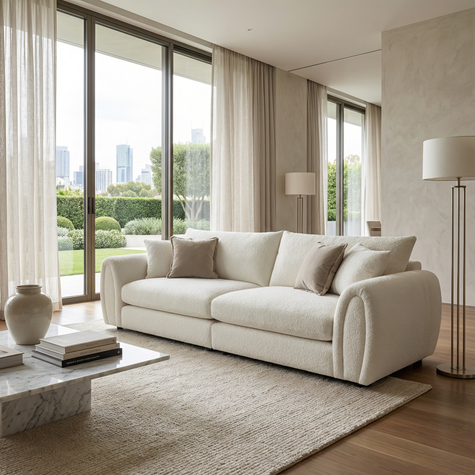
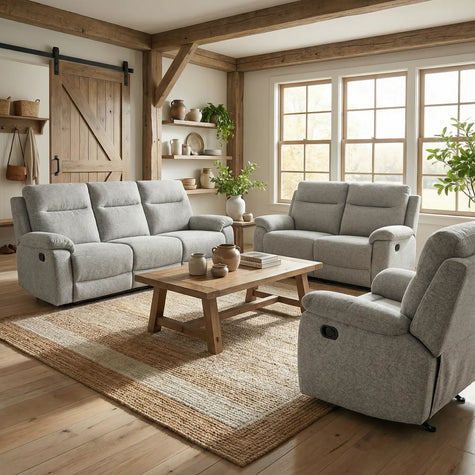
The Cavendish sofa, chair and footstool all stand on one large bordered rug, so the seating reads as a single group.
Front legs on
The front legs of the sofa and chairs rest on the rug and the back legs stay on the floor. This is the layout that works in most UK living rooms. It links the furniture together, lets you get away with a 160 x 230cm rug in front of a typical 3-seater, and keeps the cost sensible. Just make sure the rug reaches far enough under the sofa that the front feet sit on it securely, roughly 10–15cm in.

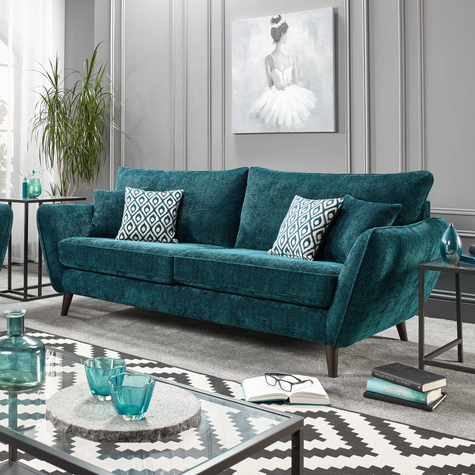
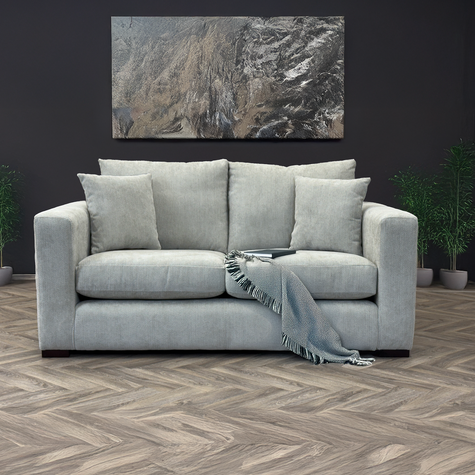
The Franco 2 seater sits with its front feet on the rug, which links it neatly to the coffee table.
Floating in front
Here the rug sits in front of the sofa with no furniture legs on it at all, usually just the coffee table. It's the best choice for smaller rooms or when you want to show off a patterned rug. The key is to keep it close: aim for a gap of no more than about 15–20cm between the rug and the sofa, otherwise it looks like it's drifted off. A floating rug should still be roughly as wide as the sofa, or at least two-thirds of it.

With the Morgan sofa and chair, the rug floats in the middle and holds the coffee table, keeping the floor feeling open.
Leave a border of bare floor
A rug isn't a carpet, so don't take it right to the walls. A frame of floor around the edge is what makes it look like a deliberate choice.
Smaller rooms: leave roughly 20–30cm of floor between the rug and the walls.
Larger rooms: 45–60cm usually looks more balanced.
Doors: check the door can swing over the rug. Thicker pile can catch on doors that sit close to the floor.
Fireplaces and stoves: keep the rug well back from the hearth and any open flame.
Radiators and floor vents: don't cover them, as the rug will block the heat.
Try to keep the border roughly even on all sides, or the rug can look like it's been pushed out of place.
Rugs for corner sofas
Corner and L-shaped sofas take up more floor, so they need a bit more thought. For most corner sofas we'd suggest one of two approaches:
Front legs on both sides. A 200 x 290cm rug tucked under the front of both runs of seating ties the whole shape together. Measure each side from the corner to the arm; the rug should reach close to both arms.
A rug in the crook of the L. If the sofa is very large, or the room is tight, a 160 x 230cm rug floating in the space the sofa wraps around works well. Line its edges up with the two runs of seating so the gaps look even.

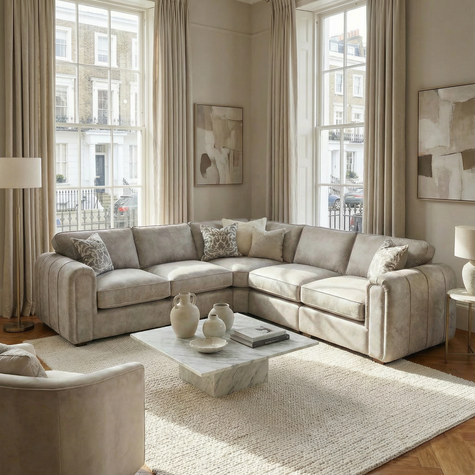
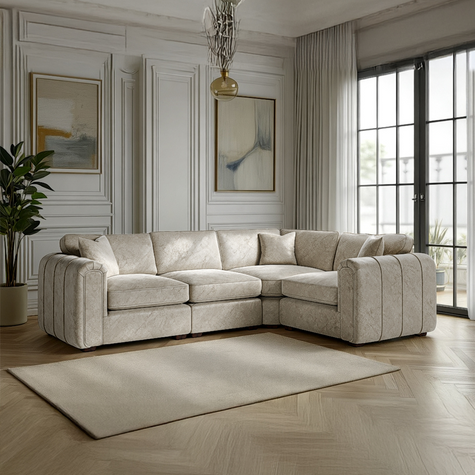
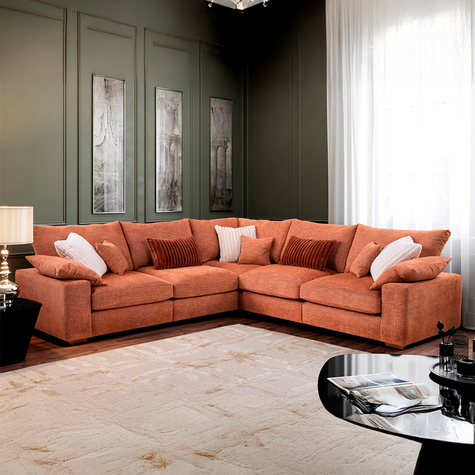
A simple textured rug laid in front of the Wilmslow corner sofa gives the seating area a clear base without covering the whole floor.
If your L-shaped sofa has a chaise, let the rug run under the front of the chaise as well. A rug that stops short of the chaise end makes the sofa look lopsided.
Small rooms and awkward shapes
It sounds backwards, but a small room often looks bigger with a bigger rug. Lots of floor broken up by a tiny rug makes the space feel chopped up, while one generous rug gives the eye a single area to settle on.
Long, narrow lounges: run a rectangular rug the same way as the room and keep the sofa on its long side.
Squarer rooms: a rug that's closer to square, or a round rug under a round coffee table, can balance the space.
Through-lounges: treat each half as its own zone with its own rug, rather than stretching one rug across the middle.
Layering: if the rug you love only comes in a smaller size, lay it on top of a larger plain or jute-effect rug. You get the size and the pattern.
Where runners fit in
Runners are long and narrow, and the standard size is around 60 x 230cm. In a living room they're handy in a few places:
In the hallway that leads into the lounge, where they take the brunt of muddy shoes.
Behind a sofa that's been pulled away from the wall in an open-plan room, marking out a walkway.
Along the kitchen side of a kitchen-diner, linking it visually to the living area.
In a hallway, leave roughly 10–15cm of floor showing on each side, and keep the ends clear of doors. Matching your runner to the living room rug, like the Esme wool runner with an Esme rug, helps the two spaces flow.
Pile, grip and everyday wear
Size is the big decision, but a few practical details make a rug much nicer to live with.
Pile under furniture: deep shaggy rugs can make sofa legs sink and wobble. Low or medium pile is easier where furniture stands on the rug.
Grip: on wooden, laminate or tiled floors, an anti-slip underlay stops the rug creeping and the corners curling.
Busy households: flatweaves, wool and mottled or patterned designs are forgiving with kids and pets. Pale, plain, deep-pile rugs show everything.
Even wear: turn the rug round every few months so sunlight and footfall don't wear one end faster.
Finish the look with a coffee table that sits comfortably within the rug, with some rug showing on every side.
Quick rug size checklist
Sofa measured arm to arm, and the rug is that wide or wider
Layout chosen: everything on, front legs on, or floating
Front feet sit roughly 10–15cm onto the rug (if using front legs on)
Floating rug no more than about 15–20cm from the sofa
An even border of floor left around the edges
Doors, hearth and radiators all clear
Anti-slip underlay for hard floors
Outline taped on the floor before ordering
Common questions
What size rug do I need for a 3-seater sofa?
For most 3-seaters, 160 x 230cm is the sweet spot, with the front legs on the rug. If the sofa is particularly long, or you want chairs on the rug too, go up to 200 x 290cm.
Should the rug be bigger than the sofa?
Ideally, yes. A rug that's a little wider than the sofa, roughly 15–20cm past each arm, looks balanced. A rug narrower than the sofa tends to look lost.
Is it OK for the rug not to touch the sofa?
Yes, that's the floating layout and it works well in smaller rooms. Just keep the gap small, about 15–20cm at most, so the rug still feels connected to the seating.
What size rug goes with a corner sofa?
Usually 200 x 290cm, tucked under the front legs of both sides. For a very large corner sofa or a smaller room, a 160 x 230cm rug floating inside the L shape is a good alternative.
Should the rug be centred on the sofa or the coffee table?
Centre it on the seating group as a whole. In most rooms that means lining the rug up with the middle of the sofa, with the coffee table in the centre of the rug.
Not sure which size will suit your room? Send us your measurements and a photo and we'll happily help you work it out. Get in touch and our team will point you towards a rug, and a sofa, that fit the way you live.