
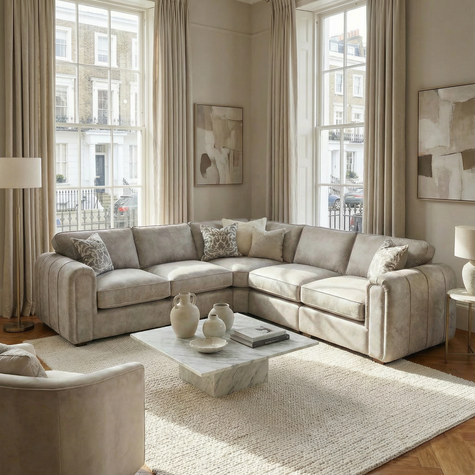
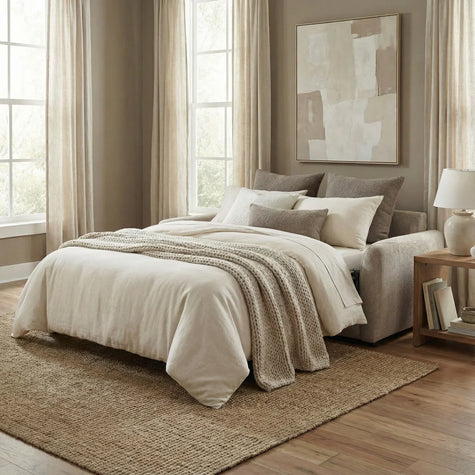
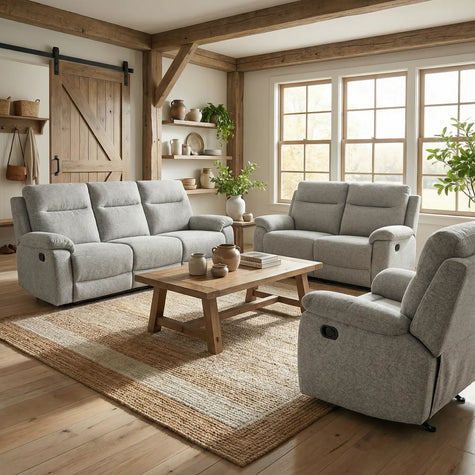
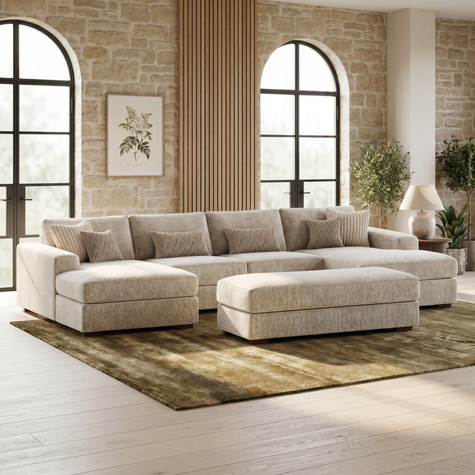



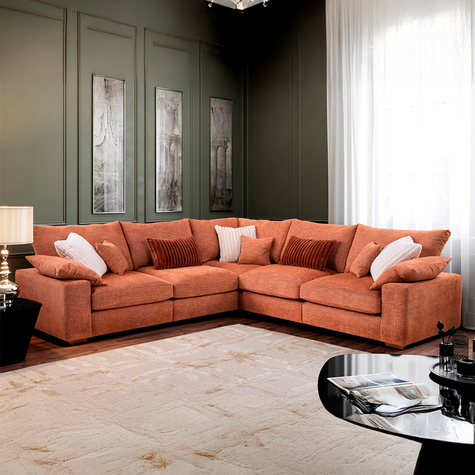












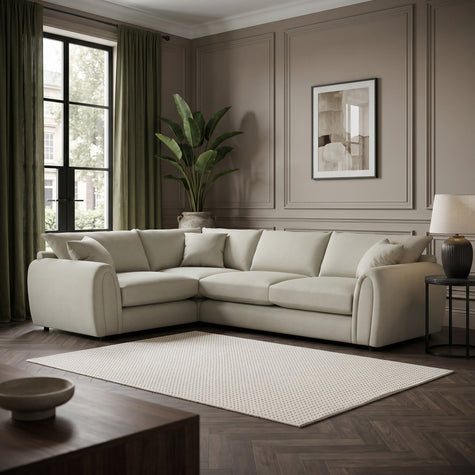





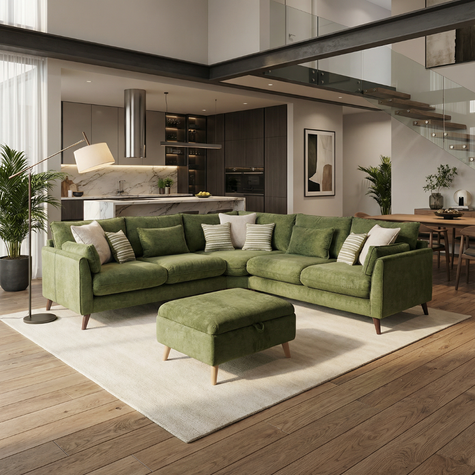



















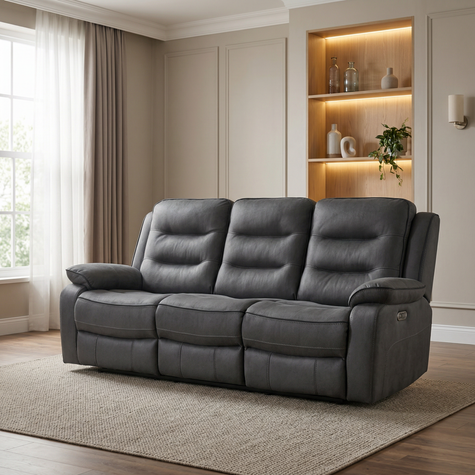


A corner sofa can transform a living room. It maximises seating, defines the space and gives the whole family somewhere to stretch out. But it is also one of the easiest pieces of furniture to get wrong. Order the wrong side, misjudge the depth or forget to measure the hallway, and a beautiful sofa becomes an expensive headache.
If you are stuck on the question of a corner sofa right or left, the answer starts with a tape measure. Before you browse the corner sofas at Home Living Outlet or anywhere else, work through these seven measurements. They take around twenty minutes and can save you weeks of frustration.
Before You Start: What You Will Need
-
A metal tape measure (cloth tapes can stretch)
-
A notepad or phone to record your numbers
-
Masking tape or paper to mark the floor
-
A helper, which makes long measurements much easier
Label every measurement clearly, for example "wall A: 3.4m". It is easy to forget which number belongs where once you start comparing models.
Measurement 1: The Length of Your Main Wall
Start with the wall the sofa will sit against, as this decides how long the longest side can be. Measure from corner to corner, but also note any features that interrupt the wall, such as radiators, windows, alcoves or doors.
Why It Matters
A sofa that is too long will either overhang a doorway or force you to leave awkward gaps. As a general rule, leave a little breathing space at each end so the arm does not touch a wall, a door or a radiator.
Pro Tip
Write down the usable length, not just the total length. If a radiator takes up the first 30cm, your real length is shorter.
Measurement 2: The Length of the Adjoining Wall
A corner sofa has two sides, so you need to measure the second wall too. This is the measurement that usually determines your answer to left or right corner sofa.
Decide Which Side the Long Section Goes
Stand facing the corner where the sofa will sit. If the longer section needs to extend along the wall to your left, you will need a left-hand facing model. If it extends to the right, choose right-hand facing. This is the heart of the left or right hand corner sofa decision, so double-check it using masking tape on the floor.
Measurement 3: The Depth of the Space
A sofa is not just long, it is deep. Measure from the wall outwards to see how far the sofa will project into the room, and compare this to the depth listed on the product page.
-
Standard seats: Allow for the full depth of the base and arms.
-
Chaise sections: These are usually the deepest part of the sofa.
-
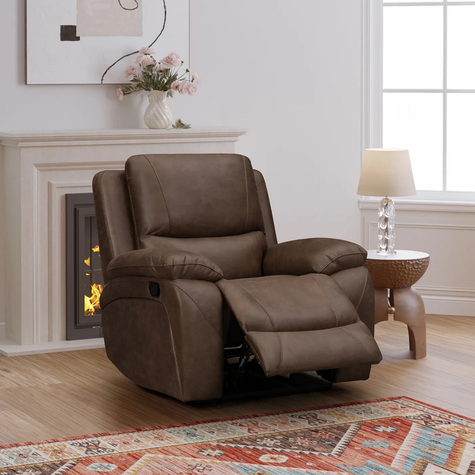
Recliners: Measure the depth when the footrest is extended, not just when it is closed.
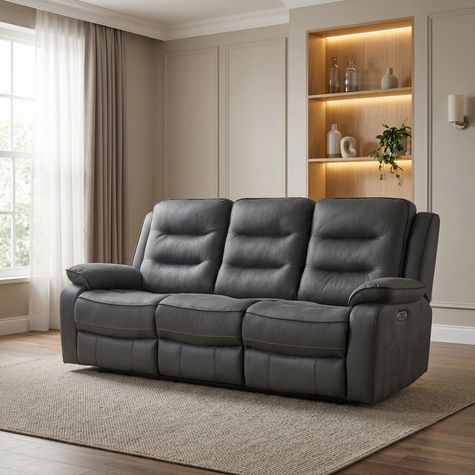
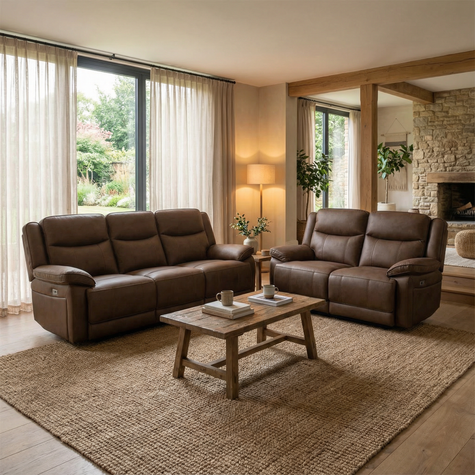
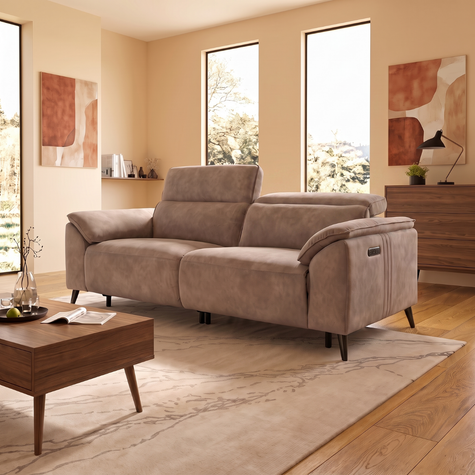
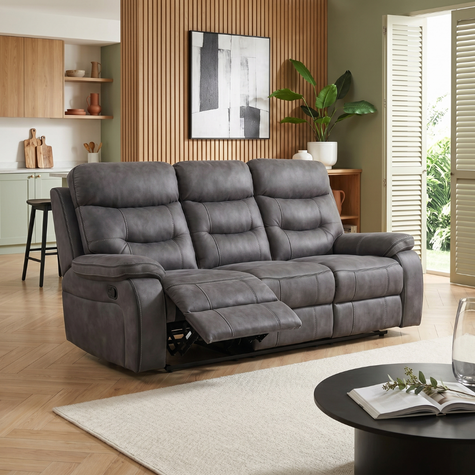
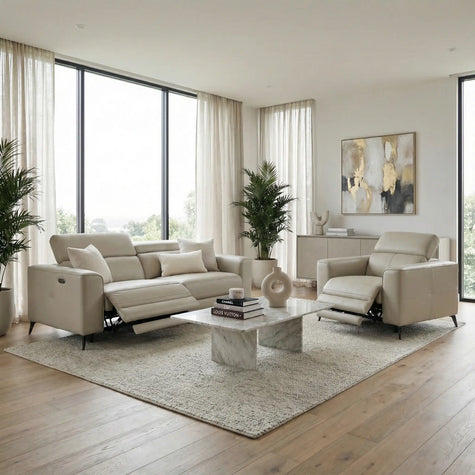
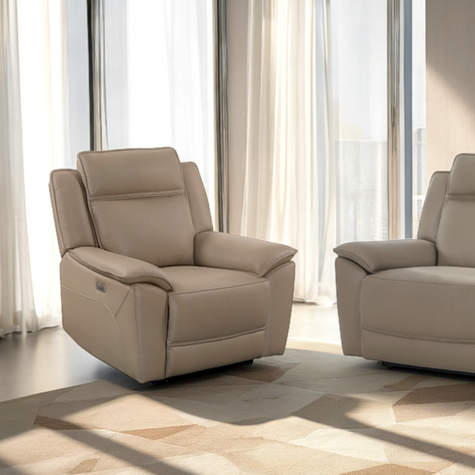
If you are considering recliner corner sofas UK homes love for movie nights, this measurement is particularly important. A recliner can need much more space in use than it does when folded.
Measurement 4: Walkways and Clearance
A corner sofa should never block how you move through the room. Measure the distances from the sofa position to doors, other furniture and walkways.
Recommended Clearances
-
Main walkways: Around 75cm to 90cm so people can pass comfortably.
-
Coffee table: About 40cm to 45cm between the sofa and the table.
-
Door swing: Enough space for doors to open fully without touching the sofa.
These are guidelines rather than strict rules, but they are a helpful starting point. If your room is small, look for a compact design and consider which side will keep the main walkway free.
Measurement 5: Radiators, Windows and Sockets
This is the measurement that people forget. Note where radiators, windows, curtains and sockets are in relation to the sofa.
-
Radiators: Avoid blocking them completely, as heat can damage upholstery and reduce warmth.
-
Windows: Check that curtains and window handles will not be blocked.
-
Sockets: If you want a power recliner or USB charging, make sure there is a socket within reach.
These details can easily tip the balance when deciding on a corner sofa right or left, because the best side is often the one that avoids a radiator or keeps a socket accessible.
Measurement 6: Seat Height, Arm Height and Comfort Zones
A sofa should fit your body, not just your room. If you can, sit on a sofa in a shop and note the measurements that feel comfortable.
What to Check
-
Seat height: Should allow your feet to rest flat on the floor.
-
Seat depth: Deeper seats suit lounging, while shallower seats suit upright sitting.
-
Arm height: Affects how you rest, read or lie down.
-
Back height: Matters for support, especially for taller people.
Measure a sofa you already own and love, then compare those numbers with the dimensions of the corner sofa you want. This simple step makes online shopping far more reliable.
Measurement 7: The Delivery Route
The seventh measurement is the one that catches people out most of all: can the sofa actually get into the room? Measure every point along the journey from the front door to the living room.
Points to Measure
-
Front door width and height
-
Hallway width and any tight corners
-
Stairs, landings and banisters
-
Internal doorways
-
Lift dimensions if you live in a flat
Compare these with the packaged dimensions of the sofa, which are often listed on the product page or available from customer service. If access is tight, a sectional or modular sofa made up of smaller pieces can be a clever solution, as each section is much easier to carry through narrow spaces.

Putting Your Measurements Together
Once you have all seven numbers, use them to narrow down your options.
Step 1: Draw a Simple Floor Plan
Sketch the room and mark the walls, windows, doors and radiators. Add the sofa shape in pencil.
Step 2: Mark It Out on the Floor
Use masking tape or newspaper to outline the sofa's footprint. Walk around it, sit in the space and imagine everyday life. Does it feel right?
Step 3: Test Both Layouts
Draw the chaise on the left, then on the right. Notice which feels more natural and which leaves the best flow. That simple comparison usually answers the left or right question straight away.
Choosing the Right Sofa for Your Budget
Once you know your measurements and your preferred side, the fun part begins. Affordable corner sofas UK shoppers can buy today come in a huge range of fabrics, colours and layouts. When comparing UK corner sofas, think about frame quality, cushion filling, upholstery and warranty as well as price. At Home Living Outlet, we want the process to feel simple, so you can choose a sofa that fits your room and your budget with confidence.
Quick Buying Checklist
-
Confirm LHF or RHF using the front-facing view
-
Check the maximum width and depth against your room
-
Review the packaged dimensions for delivery
-
Consider fabric, leather or leather-look finishes
-
Decide whether you want recliner seats
-
Check the return and warranty details
Common Mistakes When Measuring
-
Measuring once only: Always measure twice to be safe.
-
Forgetting skirting boards: They can add a little extra gap behind the sofa.
-
Ignoring door swing: An open door should not hit the sofa.
-
Forgetting the reclined size: Recliners need extra space.
-
Mixing up facing and sitting views: Always use the front view when deciding on LHF or RHF.
Final Thoughts
Deciding on a corner sofa right or left is much easier when you have the right numbers in front of you. Measure the walls, check the depth, allow for walkways, note radiators and sockets, think about comfort and plan your delivery route. Do that, and you will order with confidence. When you are ready to start shopping, visit Home Living Outlet or explore the recliner sofa collection for corner and recliner styles designed for comfortable everyday living.

Frequently Asked Questions
1. How do I know if I need a left or right corner sofa?
Stand facing the corner where the sofa will go and decide which side the longer section or chaise should sit on. If it is on your left as you face the sofa, you need a left-hand facing model. If it is on your right, choose right-hand facing.
2. What is the best side for a corner sofa chaise?
Usually the side furthest from the door, pointing towards the TV or main focal point. However, radiators, windows and walkways in your room can change the answer.
3. How much space should I leave around a corner sofa?
Aim for about 75cm to 90cm in main walkways and 40cm to 45cm between the sofa and a coffee table. Leave extra room if you are choosing a recliner.
4. Can I measure my room with a phone app?
Apps can be handy for rough estimates, but a metal tape measure is more accurate. Use both if you like, and always double-check important numbers.
5. Will a corner sofa fit through my door?
Compare the packaged dimensions of the sofa with your door, hallway, stairs and any tight corners. If space is limited, a modular sofa made from separate sections is often easier to deliver.
6. Are recliner corner sofas suitable for small rooms?
They can be, but you must account for the recline space. Measure the fully reclined depth and make sure the footrests will not hit furniture or block a walkway.


